Examples of Micro SaaS Built Without Code
Micro SaaS examples built with No-Code tools. Get inspired to launch a specialized software with minimal investment and fast development cycles.
The world of software has changed radically. Today, it is entirely possible to create functional digital products with real users and recurring revenue without knowing how to program. The no-code Micro SaaS examples you will see in this article prove that the barrier to entry for launching your own digital business has never been lower.
Table of Contents
- What is no-code and why does it matter?
- What is a Micro SaaS?
- No-code tools to create a Micro SaaS
- Real examples of no-code Micro SaaS
- No-code SaaS model: advantages and limitations
- When does no-code web make sense for a Micro SaaS?
- Conclusion
What is no-code and why does it matter?
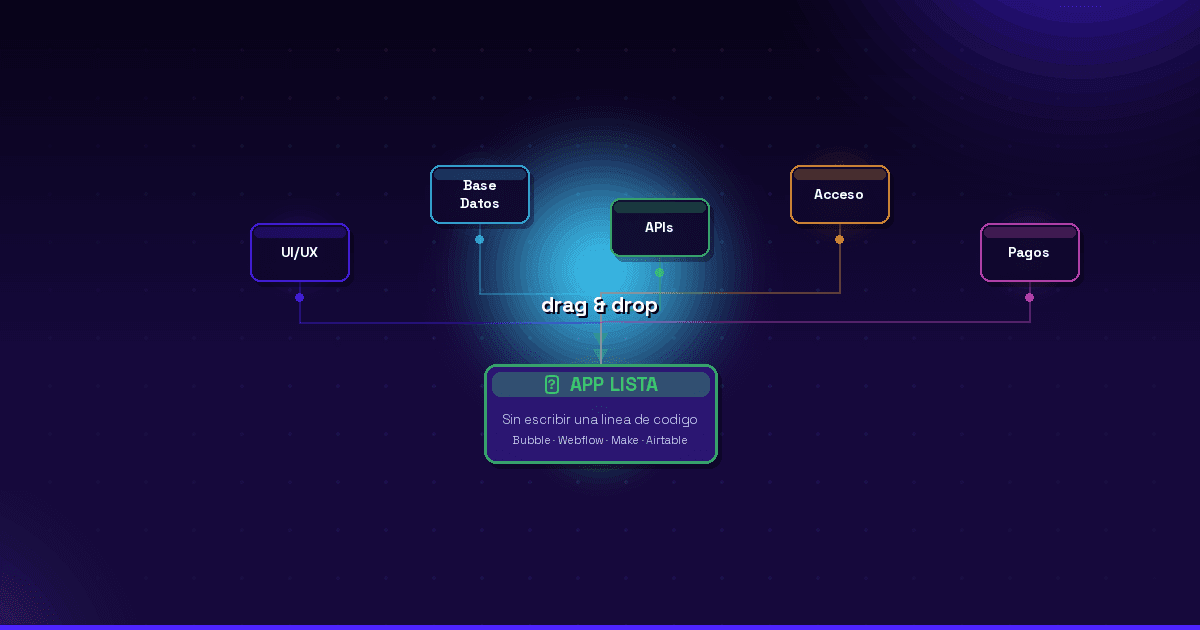
No-code (or no-code web) refers to platforms and tools that allow you to build applications, websites, and automations without writing a single line of code. Utilizing drag-and-drop visual interfaces, these tools democratize software development.
Platforms like Bubble, Webflow, Glide, Airtable, and Make have turned creating an app without programming into a tangible reality for entrepreneurs, consultants, designers, and professionals across any sector.
The impact is massive: what used to require an entire development team and months of heavy engineering can now be launched in weeks with a minimal budget.
What is a Micro SaaS?
A micro-SaaS is a Software as a Service (SaaS) product targetting a highly specific, niche market. It is typically built and maintained by a single person or a very small team, solving a concrete problem for a well-defined user base.
Unlike the traditional SaaS model—which often aims for millions of users and massive external venture funding—a micro-SaaS targets profitability from day one with a small but deeply loyal customer core.
These micro-type SaaS services share several common traits:
- They solve one specific problem exceptionally well.
- They feature accessible pricing tiers (usually between €5 and €100/month).
- They require very little support overhead and can run almost autonomously.
- The founder can manage it completely solo or with minimal outside help.
If you want to dive deeper into the concept, we also recommend checking out our dedicated article on Micro SaaS: Definition, advantages, and ideas.
No-code tools to create a Micro SaaS
Before exploring the Micro SaaS examples, it is useful to know the core tools that make building them possible:
| Tool | What it does | Ideal for |
|---|---|---|
| Bubble | Complex web applications | Portals, marketplaces, apps with heavy logic |
| Glide | Mobile apps from Google Sheets | Internal business tools, directories |
| Webflow | Advanced websites and landing pages | Sites with robust CMS, shops, blogs |
| Airtable | Visual database + automation features | Data management, lightweight CRMs |
| Make (Integromat) | Cross-app automations | Advanced workflows, deep integrations |
| Softr | Web apps built on Airtable/Google Sheets | Client portals, simple directories |
| Memberstack | Memberships and gateway user authentication | SaaS requiring logins and subscriptions |
| Stripe | Recurring payment processing | Any subscription-based revenue model |
Combining several of these tools is what allows founders to create an app without programming while delivering surprisingly robust features.
Real examples of no-code Micro SaaS
Here are some real Micro SaaS examples built entirely or partially using no-code web tools:
1. Vendor Directory for a Specific Sector
An online directory where companies in a niche market (for instance, industrial component manufacturers or veterinary clinics) can sign up and be discovered by potential clients. Built using Webflow + Airtable + Memberstack.
Business Model: Monthly subscription fee for vendors who want to be featured in the directory.
2. Commercial Proposal Tracking Tool
A lightweight app for freelancers and small agencies that lets them create, send, and track business quotes and proposals, featuring automated notifications whenever the client opens the document.
Built with: Glide + Google Sheets + Make for backend automations.
3. Automated Report Generator for Marketing Agencies
Agencies spend countless hours every month generating client performance reports. This micro-SaaS connects directly with Google Analytics, Meta Ads, and other marketing platforms to compile customized PDF reports automatically.
Model: Monthly flat subscription per agency.
4. Training Portal for SME Employees
A platform where small businesses can upload their internal training materials (videos, documents, quizzes) and track which employees have completed each mandatory module.
Built with: Bubble + Stripe + Memberstack.
5. Issue Management System for Neighborhood Communities
A no-code web portal that allows property managers to handle complaints and maintenance tickets reported by residents: ticket opening, vendor assignment, automated tracking, and closing.
Model: Monthly fee per managed neighborhood community.
6. Quoting Tool for Contractors and Renovators
A streamlined system where a technician enters material variables, labor hours, and margins, and the tool instantly generates a professional PDF quote embedded with their company branding.
Built with: Glide + Google Sheets + Make + PDF.co.
No-code SaaS model: advantages and limitations
Advantages of No-Code for a Micro SaaS
Unmatched Launch Speed. You can have an MVP (Minimum Viable Product) up and running in days or weeks, rather than waiting months.
Minimal Initial Cost. You eliminate the need to hire expensive software developers right from the starting line.
Rapid Iteration Cycles. Adjusting user flows, adding new features, or completely pivoting the product can be done instantly.
Absolute Business Focus. Instead of worrying about managing a complex technical stack, you focus purely on whether the product actually solves the core problem.
Limitations to Bear in Mind
Technical Scalability. If your micro-SaaS experiences hyper-growth, you will eventually hit a wall where no-code platform limits force you to migrate to a custom-engineered setup.
Third-Party Vendor Lock-in. If the underlying platform changes its pricing tiers or shuts down, your core business operations can be severely impacted.
Complex Logic Restrictions. Certain highly advanced workflows or proprietary business math can be incredibly hard—or outright impossible—to implement without writing code.
At NeeruTech, whenever a micro-SaaS outgrows what no-code infrastructure can handle, we step in to help migrate the product seamlessly to a custom architecture built on React, Next.js, and Node.js, preserving what works while scaling what needs to grow.
When does no-code web make sense for a Micro SaaS?
Leveraging a no-code web framework for a micro-SaaS makes the most sense when:
- You want to thoroughly validate a business hypothesis before sinking capital into custom software.
- Your business model is relatively straightforward (subscriptions, directories, niche utility tools).
- You lack the initial capital to fund a dedicated engineering team.
- Your ultimate goal is to launch rapidly and gather feedback from real-world users.
Conversely, if you know from day one that your application requires highly intricate logic, heavy API integrations, or database systems dealing with massive datasets, a custom-built solution from the start can actually save you both time and money in the long run.
Conclusion
The no-code Micro SaaS examples we have explored show that anyone with a solid idea and deep knowledge of their industry can launch a highly profitable digital product today. No-code web tools have effectively dismantled the technical wall that used to keep entrepreneurs apart from software developers.
Whether you have a vision for a micro-SaaS and are unsure where to start—be it via no-code web tools or through custom-coded engineering—at NeeruTech, we are here to help you evaluate which exact avenue makes the absolute most sense for your unique project.
Does Your Software Need to Take the Next Technical Step?
No-code is a spectacular vehicle for validating market demand. However, as your user base expands, data security becomes mission-critical, or you begin requiring fully bespoke features and custom CRMs, you need to break free from the constraints of third-party platforms.
That is precisely where we come in. Explore our specialized services in custom web development for bespoke CRMs and SaaS products using modern technologies like React and Next.js, and build a scalable, lightning-fast digital asset that is 100% your own.
Do you know of any other interesting examples of Micro SaaS built without code? Share this article and join the conversation.
Related articles
 Destacado
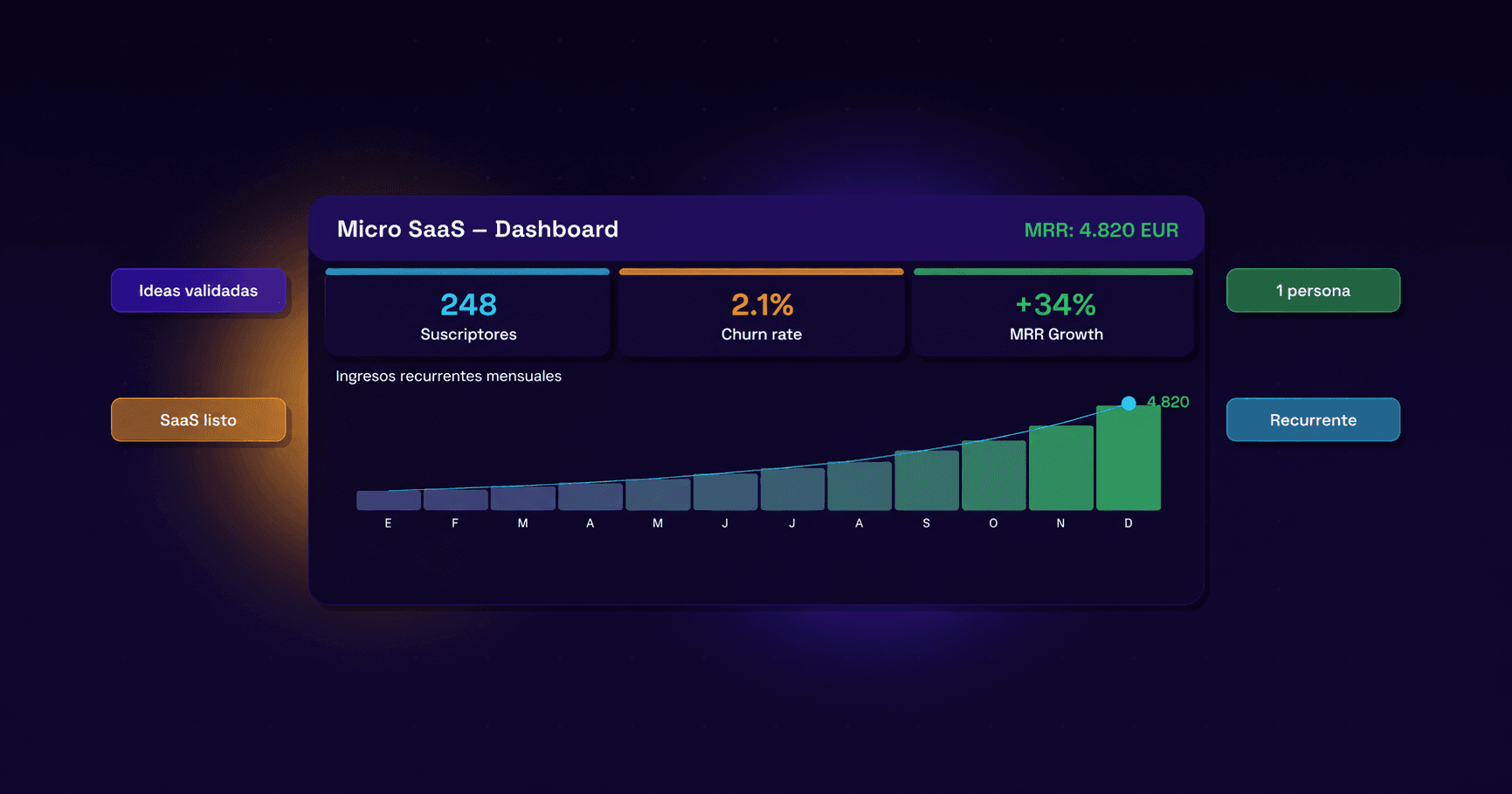
Micro SaaS: Definition, Advantages, and Ideas
Micro SaaS business: Definition, key advantages for online models, and practical ideas to build and scale a profitable niche software application.
 Destacado
When to Leave Excel Behind: Signs Your Business Needs Something Else
The signs your business has outgrown the spreadsheet, the three steps before commissioning custom software, and how to switch without breaking anything.
 Destacado
How Much a Website Costs for a Small Business in Spain
Orientative price ranges for a small business website in Spain, what drives the budget, what's usually included and what it costs to maintain each month.