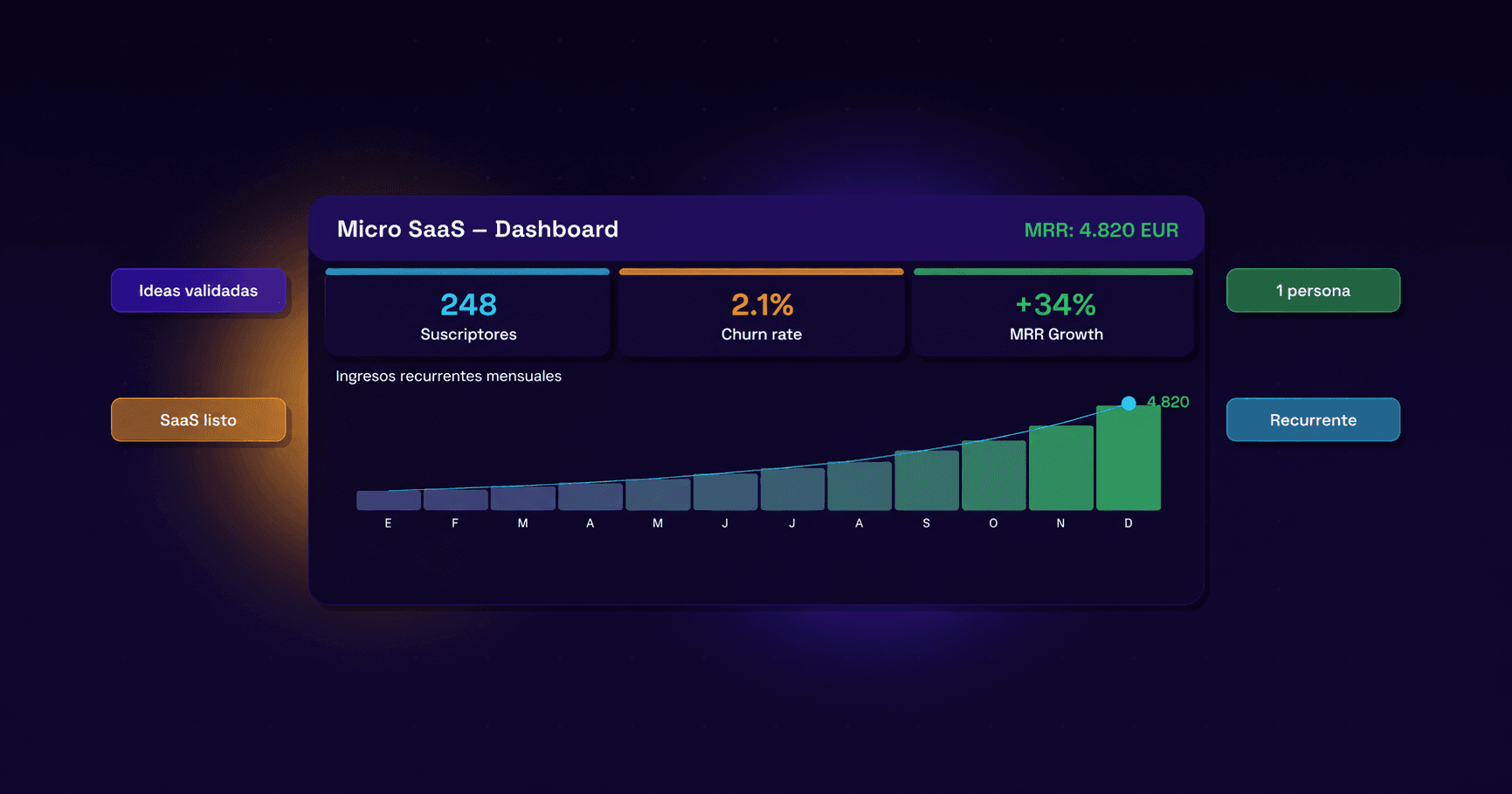
Micro SaaS: Definition, Advantages, and Ideas
Micro SaaS business: Definition, key advantages for online models, and practical ideas to build and scale a profitable niche software application.
The concept of micro-SaaS is gaining more and more attention among digital entrepreneurs, developers, and professionals looking for online business ideas with low risk and high automation potential. In this article, we explain what it is, why it is growing, and how you can get started.
Table of Contents
- What is SaaS?
- What is a Micro SaaS?
- Differences Between SaaS and Micro SaaS
- Advantages of Micro SaaS
- Micro SaaS Business Ideas to Get Started
- How to Create a Micro SaaS Step by Step
- Successful Micro SaaS Examples
- Challenges of the Micro SaaS Model
- Conclusion
What is SaaS?
Before understanding micro-SaaS, you need to be clear about what SaaS (Software as a Service) is. A SaaS is a software distribution model where the user accesses the application over the internet, usually through a monthly or annual subscription, without needing to install anything on their computer.
When asking what is SaaS, the simplest answer is: you pay a monthly fee and use the software right from your browser. Gmail, Notion, HubSpot, Slack, Dropbox... are all examples of SaaS.
The SaaS model offers a key advantage for its creator: it generates recurring and predictable revenue. Instead of selling a product once, you collect payment every single month as long as the customer continues to use the service.
What is a Micro SaaS?
A micro-SaaS is a smaller, more specialized version of the classic SaaS model: a highly specific niche digital product, maintained by one person or a very small team, which solves one single problem for a distinct group of users.
The main difference compared to traditional B2B SaaS is the overall scale. A conventional SaaS aims for millions of users and multiple rounds of venture capital funding. A micro-SaaS targets a few hundred or thousands of customers paying a modest subscription, which can generate between €1,000 and €20,000 a month in a completely automated fashion.
Differences Between SaaS and Micro SaaS
| Feature | Traditional SaaS | Micro SaaS |
|---|---|---|
| Team Size | 5-500+ people | 1-3 people |
| Target Market | Broad, horizontal | Highly specific niche |
| Funding | VC, investment rounds | Self-funded or bootstrapped |
| Time to Market | 6-24 months | 1-3 months |
| Target Revenue | Millions | Thousands to tens of thousands/month |
| Product Complexity | High | Low to medium |
| Automation | Partial | High |
Advantages of Micro SaaS
Recurring Income from Day One
The SaaS model yields predictable revenues. With a micro-SaaS, you know exactly how much you are going to invoice each month without depending on landing new client projects or one-off contracts. It’s the difference between a highly volatile income and a stable one.
Low Operational Overhead
A well-architected micro-SaaS can run almost entirely on autopilot. The server infrastructure, payment processing gateways, automated support systems... everything can be maximized for automation. Many micro-SaaS founders dedicate only a few hours a week to general maintenance.
Scalability Free of Proportional Costs
Unlike professional services, where more clients mean putting in more billable hours, a micro-SaaS lets you scale your revenue without proportionally multiplying your infrastructure costs. Moving from 100 to 500 active users does not mean a five-fold increase in your workload.
Ideal as an Online Business Idea
For anyone scouring for online business ideas with minimal upfront risk, a micro-SaaS is incredibly compelling. You can easily kick it off as a side project, validate real market demand, and scale up organically as it grows.
Gateway to Digital Entrepreneurship
For individuals seeking innovative entrepreneurship ideas in the digital space, a micro-SaaS presents a relatively low barrier to entry: you don't need a huge team, massive capital expenditures, or a horizontal market. You simply need a genuine user friction point and a specific group of people willing to swipe their cards to fix it.
Micro SaaS Business Ideas to Get Started
Here are concrete business ideas in the micro-SaaS format that you can begin exploring today:
For Freelancers and Small Businesses
- Bespoke Contract Generator: A freelancer inputs their specific details and those of their client, and the system instantly outputs a customized PDF contract ready for digital signature.
- Pending Payment Tracker: Automated follow-ups and custom drip sequences sent to clients with overdue or outstanding invoices.
- Streamlined Project Management: Free of the complex bloat found in Jira or Asana, capturing only the bare essentials for teams of 2-10 people.
For Local Businesses
- Booking Management for Salons/Clinics/Workshops: Free of third-party platform marketplace interfaces and predatory booking commissions.
- Local Business Loyalty Frameworks: Digital stamp cards, reward points systems, and targeted mobile notifications for neighborhood storefronts.
- Post-Service Satisfaction Surveys: Complete with automated weekly analytics reports delivered straight to the business owner’s inbox.
For Online Businesses
- Competitor Price Monitoring Utilities: Built for online stores looking to automatically adjust their product pricing rules dynamically.
- AI-Powered Product Description Tooling: Ideal for e-commerce platforms dealing with massive, fast-moving catalogs.
- Weekly E-commerce Metrics Reporting: Seamlessly syncing with WooCommerce or Shopify to deliver automated dashboard summaries every Monday morning.
For Industry Niches (Niche B2B SaaS)
- Inventory Tracking Software for Specialized Distributors: Tailored for food supply chains, construction material yards, or industrial hardware distributors.
- Lightweight CRM for Boutique Real Estate Agencies: Stripped of the overhead, training requirements, and price tag associated with Enterprise solutions like Salesforce.
- Timesheet and Job Order Manager for Mobile Field Technicians.
These are just a handful of potential business ideas. The golden rule is that a software business idea doesn’t have to reinvent the wheel: it just has to solve a tangible problem for users who value a solution enough to pay a recurring fee for it.
How to Create a Micro SaaS Step by Step
Creating an online business through a micro-SaaS framework boils down to a sequence you can summarize like this:
Step 1: Isolate the Friction Point
Interview professionals inside an industry you know inside out. What tasks are they running manually that could be programmed away? What software tool do they constantly wish they had? What internal workflow drains hours of their time every week?
Step 2: Validate the Willingness to Pay
Before spending a second writing code, prove there is genuine commercial intent. Running short surveys, picking up direct validation phone calls, or deploying a targeted "waiting list" landing page can quickly confirm if the problem carries enough weight for users to open their wallets.
Step 3: Architect the MVP
A Minimum Viable Product (MVP) is the barest functional blueprint that solves the core issue. It doesn’t need to look perfect. You can wire it up with no-code utilities to validate faster, or develop it as a custom-coded build if you possess the engineering background or have a dedicated technical team.
Step 4: Deploy and Adapt
Launch your product out to your initial cohort (even if it's just 10 users), listen intently to their feedback, and push improvements in rapid, continuous deployment cycles. The initial deployment is never the final version.
Step 5: Automate and Scale
Once the core logic settles, automate the onboarding, standard support requests, billing, and transactional communications. This allows you to create an online business that yields recurring rewards with minimal daily intervention.
Successful Micro SaaS Examples
Here are a few well-known micro-SaaS ventures that started exceptionally small:
- Transistor.fm: A high-growth podcast hosting platform. Built by two co-founders, it now generates millions of dollars in annual recurring revenue.
- Carrd: A highly streamlined single-page website builder. Operated by a single solo founder, it hosts hundreds of thousands of active sites.
- Lemon Squeezy: A merchant-of-record payment platform built for digital creators. It started as a tight utility project and was recently acquired by Stripe.
Across Europe, an increasing number of founders are successfully deploying their own niche micro-SaaS products in sectors ranging from neighborhood property management to hospitality, law tech, and online education.
Challenges of the Micro SaaS Model
It’s not all smooth sailing. Here are the primary obstacles you will face along the journey:
Isolating the Correct Niche. It is very easy to spend weeks building a product that nobody actually wants to pay for. Comprehensive upfront market validation is vital.
Marketing and Acquisition Channels. A world-class product without visibility will starve. A micro-SaaS requires a clear content strategy, organic SEO, community building, or built-in distribution loops.
User Support Overhead. Even on highly automated systems, users will eventually encounter bugs or billing edge-cases. You need a reliable framework to manage ticketing.
Churn Management. Retaining active subscribers is just as important as signing up new ones. Constant product refinement and high software reliability are key.
Conclusion
A micro-SaaS represents one of the single most compelling business ideas for modern creators looking to stack up recurring digital revenue without building a traditional, bloated startup. It fuses the best aspects of the SaaS model (predictable monthly recurrences and immense scale) with the perks of running an autonomous project (independence, low operating costs, hyper-focus).
If you have a business idea for a future micro-SaaS and are trying to decide whether to map it out using no-code frameworks or engineer it via a custom technical stack, at NeeruTech we are here to help you plot out the single most strategic path for your situation.
Ready to Transform Your Vision into a Real Software Asset?
The ultimate success of a Micro SaaS lies in two critical pillars: delivering an iron-clad solution to a real-world problem and offering a flawless user experience that keeps cancellations at zero. If you want your application to stand out in a competitive ecosystem, run blazing fast, and scale efficiently, you need premium technical engineering that safeguards your proprietary code.
At NeeruTech, we specialize in scaling software visions into high-performing digital realities. Explore our specialized services in custom web development for bespoke CRMs and SaaS products leveraging next-generation frameworks like React and Next.js, and command the market with a robust, highly competitive software asset.
Do you have a vision for a Micro SaaS? Share this article with anyone looking to engineer their own digital venture.
Related articles
 Destacado
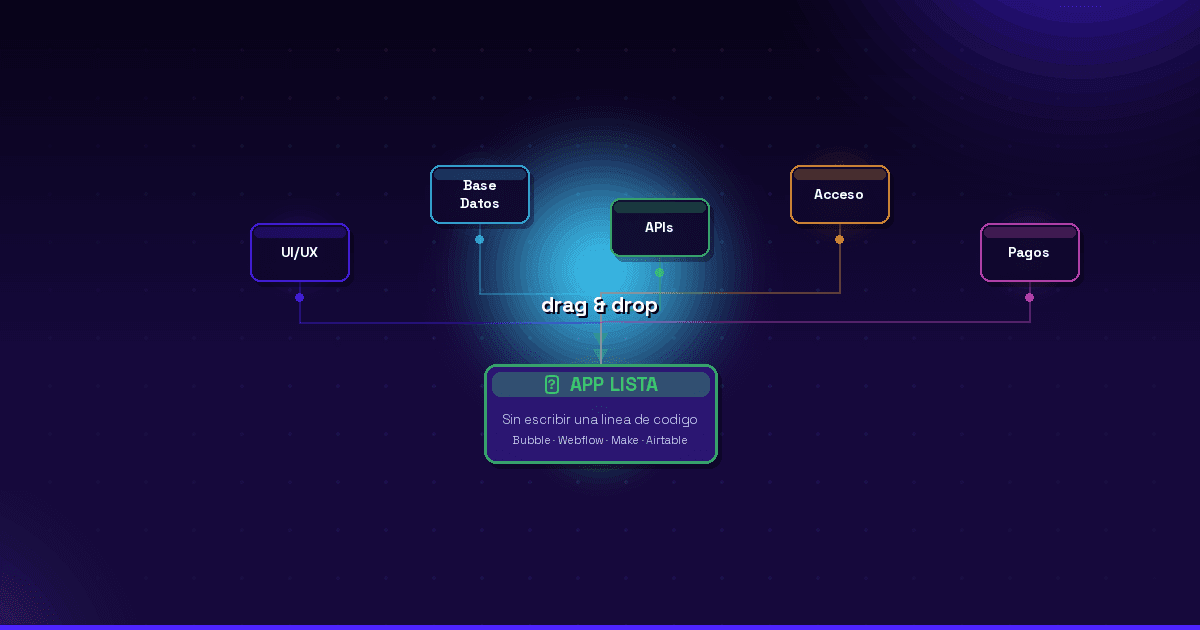
Examples of Micro SaaS Built Without Code
Micro SaaS examples built with No-Code tools. Get inspired to launch a specialized software with minimal investment and fast development cycles.
 Destacado
When to Leave Excel Behind: Signs Your Business Needs Something Else
The signs your business has outgrown the spreadsheet, the three steps before commissioning custom software, and how to switch without breaking anything.
 Destacado
How Much a Website Costs for a Small Business in Spain
Orientative price ranges for a small business website in Spain, what drives the budget, what's usually included and what it costs to maintain each month.