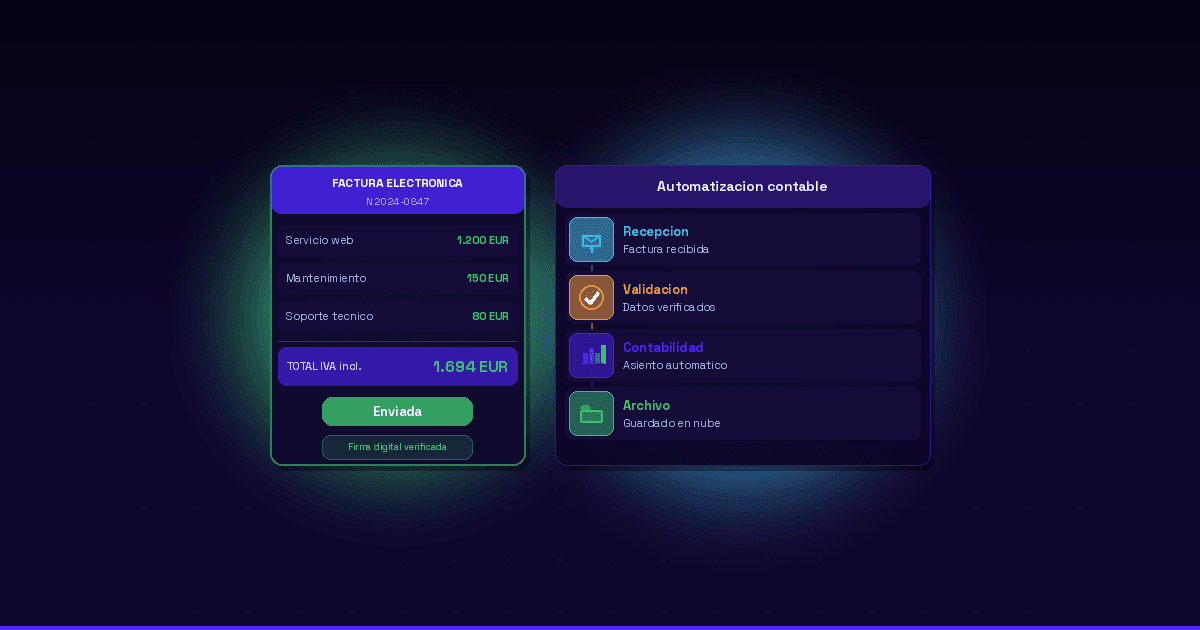
How to Choose a Invoicing System and Automate Your Accounting
Invoicing system: Guide to choosing the ideal software, complying with electronic invoice regulations, and automating your business accounting.
If you are a freelancer or run an SME, you likely already know that managing invoices manually drains valuable time that you could otherwise spend growing your business. The good news is that automating your accounting and choosing the right electronic invoicing system is no longer a privilege exclusive to large corporations. In this guide, we break down exactly how to achieve it.
Table of Contents
- Why is digitalizing your invoicing urgent?
- Mandatory electronic invoicing: what you need to know
- What is an electronic invoicing system?
- How to choose the best accounting software for your business
- Automating your accounting: which processes can you automate?
- Expense and income tracking: why it is mission-critical
- Digital invoice vs. Paper invoice: key differences
- How to issue an electronic invoice correctly
- Conclusion
Why is digitalizing your invoicing urgent?
The hours your business squanders on generating, sending, filing, and cross-checking invoices is time taken away from selling, producing, or innovating. That hidden operational cost is numbers off your bottom line.
Furthermore, dynamic tax compliance updates globally mean that mandatory electronic invoicing frameworks are rapidly expanding for B2B transactions. If you are still relying on a fragmented invoicing layout, transitioning to a digital asset is no longer optional—it is a matter of time.
Digitalizing and automating your company's accounting yields immediate returns:
- Drastic reduction of human errors in billing cycles.
- Less billable time locked up in repetitive administrative routines.
- Superior expense tracking and income analytics in real time.
- Guaranteed regulatory and tax compliance.
- Up-to-the-minute financial reporting to make better strategic moves.
Mandatory electronic invoicing: what you need to know
Regulatory shifts across international markets are making structural digital invoice architectures mandatory for all corporate B2B trading relations. A digital invoice is not merely an attached PDF sent via email.
True electronic invoicing features a structured, standardized electronic code metadata layout (such as specific XML or regional compliance formats). This architecture allows it to be processed automatically by the receiver's accounting ledger systems, opening the door to the complete automation of the order-to-cash workflow.
If you haven't started preparing your internal architectures yet, now is the strategic time to act.
What is an electronic invoicing system?
An electronic invoicing system is a software solution engineered to let you create, transmit, receive, archive, and manage digital invoices automatically while staying fully compliant with current local tax regulations.
The most robust accounting setups on the market feature:
- Automated recurring invoice generation.
- Real-time income and expense tracking dashboards.
- Native integration with government tax agency systems for declarations.
- Direct bank account sync functions for automated bank reconciliation.
- Frictionless data exports built for external bookkeepers or advanced accounting software.
How to choose the best accounting software for your business
Not all accounting programs share the same capacities. The strategic match depends on the size and complexity of your enterprise operations:
For Freelancers and Micro-businesses
You need a lightweight, cost-effective, and rapid deployment asset. Popular agile platforms include cloud platforms like Holded, Quipu, or Billin, which focus on fast invoice execution, intuitive bank feeds, and straightforward layout tracking modules.
For Scaling SMEs with Higher Volume
You require a robust electronic invoicing system with deep capability to integrate natively with external enterprise resource planning tools or CRM databases, such as Sage, specialized corporate accounts systems, or SAP modules.
Core Evaluation Criteria
When selecting your core invoicing framework, map out these prerequisites:
✅ Native compatibility with structured metadata schemas and government-mandated formats.
✅ Secure banking API integration for automated transactional reconciliation.
✅ Immediate capacity to issue electronic invoices directly from the core app UI.
✅ Seamless data export formats for external audits and advisory squads.
✅ Continuous expense tracking and cash flow visualization in real time.
✅ Workflow rule triggers for automated recurring accounts.
Automating your accounting: which processes can you automate?
Automating your accounting does not mean software updates will magically manage your company books without oversight. It means systematically purging manual, repetitive tasks that drain resource hours without adding value. These are the prime workflows to automate:
Recurring Billing Runs
If you sign clients to fixed monthly service retainers, the system can autonomously compile, authorize, and dispatch the compliant electronic invoice every billing cycle without manual staff involvement.
Accounts Receivable Drip Automations
When a digital invoice sits past its payment terms for a set number of days, the automation engine triggers tailored balance notifications to the client, protecting your cash flow entirely on autopilot.
Live Bank Reconciliation
Modern accounting software builds can bridge directly with your banking accounts, instantly matching transactional deposits and payments with corresponding open invoices. This deletes hours of monthly bookkeeping legwork.
Intelligent Expense Categorization
Machine learning models quickly learn how to index your corporate spend profiles based on historical entries. Over time, your expense tracking ledger updates itself almost completely hands-free.
Automated Financial Reporting
Instead of spending days manually compiling the monthly income control balance sheet, your dashboard populates the financial metrics autonomously based on live data lines.
Expense and income tracking: why it is mission-critical
Too many business owners treat bookkeeping purely as an administrative tax obligation rather than an internal management tool. That is a major oversight. Maintaining real-time expense tracking and income monitoring gives you the leverage to:
- Detect impending cash-flow or liquidity bottlenecks weeks before month-end.
- Target and eliminate unnecessary operational resource drains immediately.
- Evaluate exact profit margins across specific products, services, or client accounts.
- Base your capital investments on real financial data, not gut feeling.
Corporate expense tracking and income evaluations should be an agile weekly habit, not a stressful quarterly fire drill forced by tax deadlines.
Digital invoice vs. Paper invoice: key differences
| Aspect | Digital / Electronic Invoice | Legacy Paper Invoice |
|---|---|---|
| Format | Structured XML, verified digital signature PDF | Physical paper sheets |
| Delivery | Instantaneous via automated email or secure portal | Postal mail or manual hand-off |
| Archiving | Automated, secure cloud hosting repositories | Manual filing, physical storage costs |
| Searchability | Instant global text search queries | Manual folder tracking |
| Ledger Integration | 100% automated metadata parsing | Manual ledger entry errors |
| Cost Footprint | Extremely low per-transaction overhead | Printing + postage + space expenses |
How to issue an electronic invoice correctly
To issue an electronic invoice properly, your workflow must respect these core technical phases:
- Deploy a certified software suite capable of exporting compliant structured schemas.
- Audit mandatory metadata fields: Unique invoice serials, dates, full issuer and receiver tax credentials, transparent line-item descriptions, tax bases, and accurate total numbers.
- Apply verified digital signatures: Utilizing advanced cryptographic certificates to guarantee data integrity.
- Dispatch via official channels: Piping data securely through automated client networks or official government ingestion clearing hubs.
- Secure compliant data retention: Hosting records securely in encrypted environments for the legally mandated storage window.
At NeeruTech, we partner with enterprises to bridge legacy operational setups with automated digital invoicing flows, including seamless syncing across independent booking apps and enterprise accounting environments.
Conclusion
Deploying the perfect electronic invoicing system and automating your accounting is not simply an efficiency play; it is an immediate requirement to keep pace with modern digital tax mandates and a core competitive advantage over businesses still manually managing their billing runs.
Begin by identifying which administrative routines absorb the most time within your billing cycle, roll out an accounting program calibrated to your exact business scale, and take the definitive step toward automated efficiency.
If you need to connect your invoicing framework with the rest of your business ecosystem—be it your CRM, an e-commerce platform, or external payment processing rails—at NeeruTech, we handle the integration for you.
Ready to Wipe Out Manual Paperwork For Good?
Staying fully compliant with changing invoicing laws doesn't have to be an operational bottleneck. The true power of your business is unlocked when you connect your financial ledger with intelligent automation workflows that parse invoices using AI, reconcile bank fees autonomously, and update your CRM records in real time.
Leave tedious administration behind and fortify your infrastructure. Explore our specialized services in AI automation for businesses and intelligent workflows and evolve your financial management into an agile, modern, and completely automated operation.
Are you still managing your invoicing manually? Share this article with other freelancers and entrepreneurs who need to streamline their workflows.
Related articles
 Destacado
Connect Your AI to Your Business Data: What MCP Is and How to Build It
What MCP is, what you can ask AI about your own data, and the three security decisions to make before connecting anything.
 Destacado
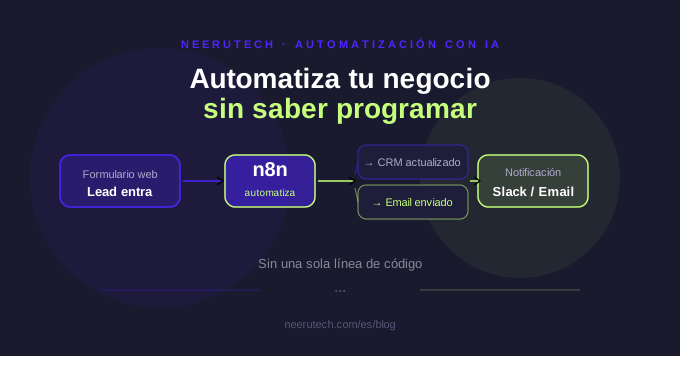
n8n for Beginners: Automate Your Business Without Writing Code
Learn what n8n is, how it works, and how you can automate repetitive business tasks without writing a single line of code. A practical guide for small businesses.
 Destacado
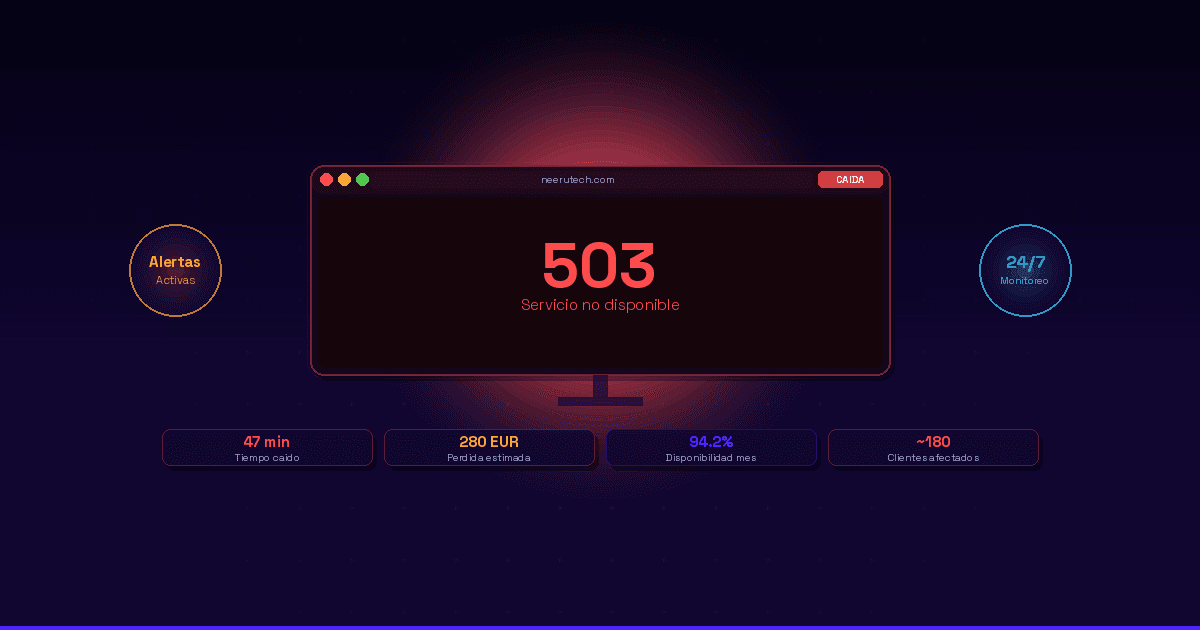
How Much Money Does Your Business Lose Every Minute Your Website Is Down?
Website maintenance services: Discover the real cost of server downtime and why proactive technical support protects your business revenue.